
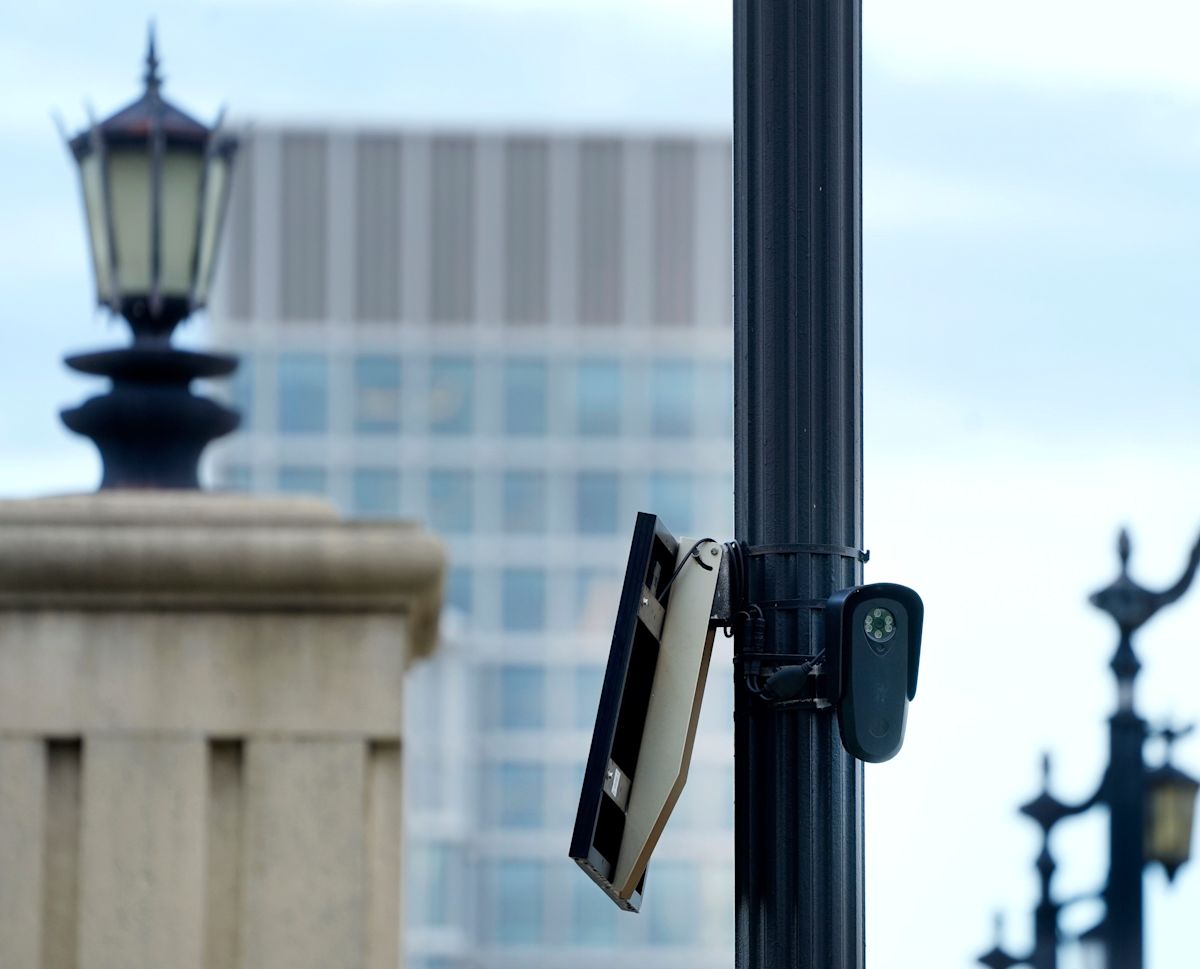
A shifting regulatory landscape and growing privacy concerns have brought automated license plate reader programs under intense scrutiny in Alachua County, prompting local officials and community advocates to call for clearer public guardrails on automated surveillance networks.
The debate intensified following an abrupt policy enforcement by the Florida Department of Transportation on August 31, 2026. The state agency officially revoked general use permits for automated license plate readers operating within state highway rights-of-way, issuing a mandate requiring law enforcement and municipal agencies to remove non-compliant camera hardware within a 30-day window.
In the wake of the state directive, Alachua County Sheriff Chad Scott confirmed that local authorities identified 27 automated camera devices that met the criteria for mandatory removal. While those roadside units along state-controlled corridors are slated to come down, the broader scanning apparatus remains largely intact, as automated plate readers situated outside state rights-of-way continue full operations.
The sudden state-level intervention coincided with grassroots efforts by local independent researcher Sam Cornell, a Gainesville resident and organ recovery surgical coordinator who spent the summer analyzing public records associated with automated tracking programs. Cornell brought the issue directly before the Alachua County Commission, urging the local governing body to re-examine how automated scanning networks are deployed and regulated across the region.
During the commission appearance, Cornell called on all five county commissioners to take a closer look at the surveillance program. Rather than demanding that agencies completely dismantle the scanning infrastructure, the presentation urged commissioners to implement specific policy protections. The five-member commission reached a consensus that the county's license plate reader initiative deserved a formal and comprehensive review.
The proposed safeguards focus on instituting shorter data retention timelines, enforcing independent audits, establishing transparent protocols regarding which outside entities can access stored location data, and providing a comprehensive financial accounting of program costs to local taxpayers.
Cornell’s initial inquiry into the program focused on unresolved administrative questions, including whether local law enforcement agencies had maintained valid Florida Department of Transportation permits for cameras mounted along major transit routes. The state's sweeping decision to revoke existing right-of-way permissions answered those regulatory questions overnight, accelerating a debate that had previously developed at a slower pace.
Public discussions surrounding the scanning technology have highlighted the delicate balance between community privacy protections and law enforcement capabilities. Independent analyses and law enforcement records show that the camera networks serve significant investigative functions, aiding police officers in recovering stolen motor vehicles, locating missing individuals, and supporting active criminal investigations.
Sheriff Scott confirmed that the surveillance technology has provided critical assistance to the Alachua County Sheriff's Office in solving serious crimes, including homicides, armed robberies, and urgent missing-person cases. Documentation from surrounding areas has demonstrated similar operational patterns, including Lake County, which previously provided two dozen case summaries illustrating how license plate tracking data helped detectives resolve complex investigations.
Nevertheless, advocates and law enforcement leaders acknowledge that the overwhelming majority of data points captured by automated cameras involve law-abiding citizens. Sheriff Scott noted that the vast majority of vehicle images recorded by the scanners depict ordinary residents traveling to daily jobs or driving children to school, emphasizing that ordinary motorists are not criminal suspects and must not be treated as such.
According to Sheriff Scott, the core ethical and administrative questions facing local government do not center on eliminating investigative tools, but rather on determining what specific data is collected, establishing how long digital records should be retained, identifying authorized personnel permitted to search the databases, and defining what legal thresholds make a license plate search legitimate.
Privacy advocates point out that removing cameras from state highway rights-of-way addresses only jurisdictional boundaries rather than establishing a comprehensive privacy policy. Because the underlying surveillance network continues to function on non-state roadways, community members argue that physical location boundaries alone cannot substitute for structured local oversight and clear usage rules.
The policy dialogue in Alachua County has developed through administrative transparency. When researchers requested public records regarding the camera program, the Alachua County Sheriff's Office furnished the requested documentation free of charge within approximately one week, facilitating an evidence-based discussion among local leaders, law enforcement officials, and residents.
As county representatives and agency officials prepare for further discussions regarding the future of automated vehicle tracking, community leaders continue to advocate for public policies that balance police effectiveness with civil liberties. Advocates maintain that local communities can support law enforcement investigations while ensuring that technologies capable of monitoring widespread public movement remain strictly governed by transparent rules shaped with community input.


(0)