
In an ambitious effort to protect affordability for working-class families, the city of Newark has launched a network of five non-profit, publicly subsidized grocery stores designed to provide discounted household staples and fresh food. The initiative, spearheaded by municipal leadership, targets essential nutritional needs across all five of the city’s wards by pairing municipal seed money with grassroots community organizations.
During a public unveiling of the initiative, leaders demonstrated how the new pricing structure directly benefits neighborhood consumers. Peter Rosario, the executive director of the Latino-focused social services organization Casa de Don Pedro, presented a 9.6-ounce container of Folgers coffee to an audience of approximately one hundred local shoppers, municipal leaders, and non-profit directors. Rosario pointed out that while traditional commercial supermarkets typically retail the item for $8.99, the newly opened non-profit storefront is offering it to community members for $7.49.
The pricing advantages extend across basic pantry goods. Following Rosario's demonstration, Vesta Godwin Clark, who leads the St. James Social Service Corporation, showcased a jar of pickles to highlight the immediate savings for local shoppers. Clark noted that standard commercial supermarkets such as ShopRite sell the product for $3.79, whereas her organization’s newly inaugurated storefront provides the exact same item for just $3.00.
The initiative is designed to counteract rising living costs in New Jersey's largest city. Newark Mayor Ras J. Baraka emphasized during the opening ceremony that ensuring access to reasonably priced nutrition remains a fundamental obligation of municipal governance. Baraka asserted that food access at an affordable cost is a baseline necessity for all residents, affirming that no family in the rapidly developing city should have to experience food scarcity or find themselves priced out of daily sustenance.
To establish the program, the city government provided each of the five participating non-profit organizations with an individual grant of $250,000. These financial awards followed a rigorous review process conducted by municipal officials to evaluate the capacity, community history, and operational capabilities of each applicant organization.
The financial assistance serves primarily as flexible seed capital. According to Rosario, whose organization established its outlet at Casa de Don Pedro’s Broadway complex, the funds can be allocated as needed to manage initial capital expenses, cover start-up costs, secure inventory, and pay operational staff salaries. To ensure consumer protection, the city has instituted a strict pricing cap that restricts merchandise markups to a maximum of 30 percent over wholesale acquisition costs.
The concept for this non-profit retail network emerged directly from a critical food security crisis that impacted the region the previous November. During that period, a federal government shutdown interrupted the standard distribution of Supplemental Nutrition Assistance Program (SNAP) benefits. In response, municipal leadership quickly organized an emergency summit with local non-profit directors to establish temporary relief centers across the city to assist affected households.
That emergency intervention relied on neighborhood distribution points in each of the five wards to supply free provisions to residents whose electronic benefit transfer cards had stalled. Building on the infrastructure created during that crisis, the new grocery stores represent a permanent retail model. City officials confirmed that all five storefronts are preparing to accept SNAP payments along with Special Supplemental Nutrition Program for Women, Infants, and Children (WIC) benefits.
The selection of the operating partners was based on their long-term commitment to community food security. Crystal Rosa, a spokesperson for the city of Newark, explained that the administration chose organizations with established footprints in their designated wards. Rosa noted that these groups possess extensive backgrounds managing soup kitchens, food pantries, and local farmers markets, and have demonstrated historical alignment with the city's broader food security goals.
The five locations provide geographic coverage across the entire municipality. In the Central Ward, the St. James Social Service Corporation operates "Our Community Grocery Store" at 312 New Street. The North Ward facility is managed by Casa de Don Pedro at 39 Broadway Avenue, while Mantena Global Care oversees the East Ward branch at 296 Ferry Street. In the South Ward, the Clinton Hill Community Corporation runs the location at 393 Hawthorne Avenue, and the United Community Corporation manages the West Ward site at 503 Central Avenue.
The physical transformation of these neighborhood spaces reflects their community mission. The Central Ward storefront on New Street occupies a converted low-rise brick facility that once operated as a commercial automotive repair garage. The exterior now features a brightly colored produce mural adorned with the words "Care," "Fresh," and "Hope," establishing a welcoming presence along an otherwise residential corridor.
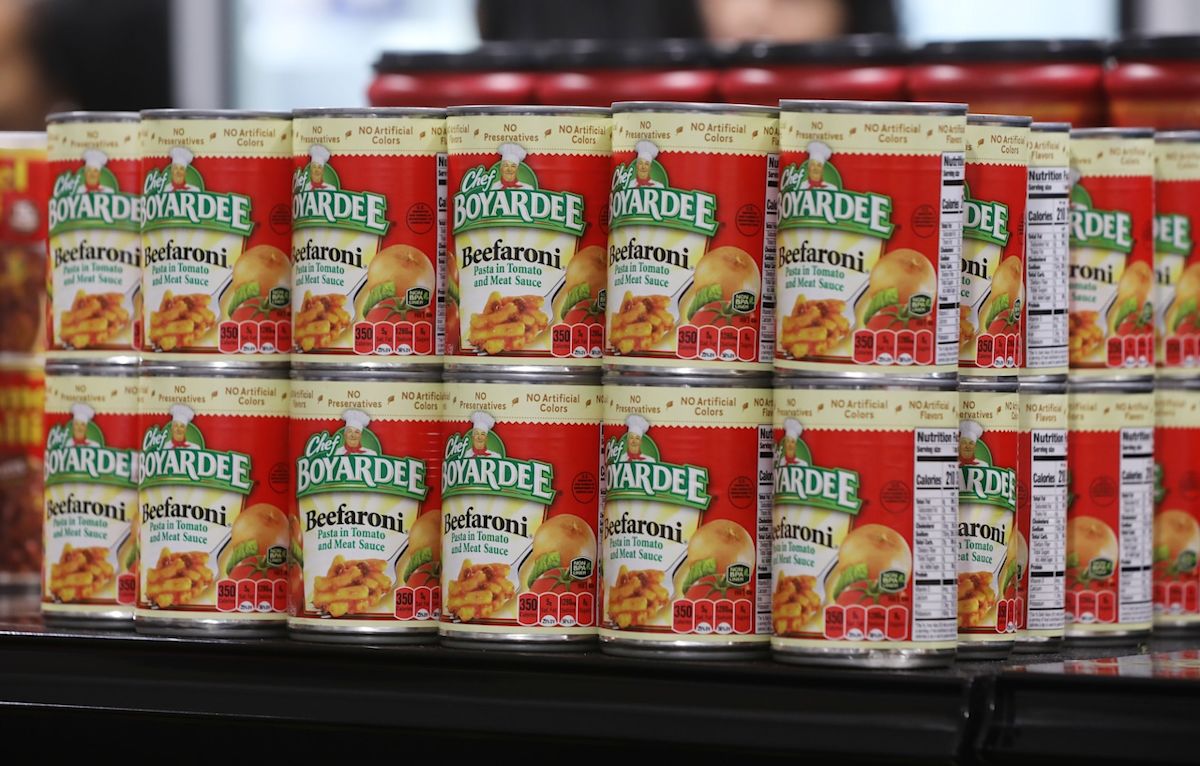
Inside the New Street location, the retail space is fully stocked with both non-perishable goods and cold storage essentials. Shoppers can find brand-name pasta sauce, macaroni and cheese, black beans, canned tuna, chili, pancake mix, syrup, breakfast cereal, oats, and snack items. In addition to shelf-stable foods, refrigerated units supply fresh broccoli, chicken thighs, and bacon, alongside essential personal hygiene and household products such as soap, toothpaste, and toilet paper.
Newark’s municipal model offers an alternative approach to other urban food initiatives in the region. In New York City, Mayor Zohran Mamdani proposed a program where the municipal government would own grocery facilities and contract private operators to retail goods at 30 percent below market prices. Conversely, Mayor Baraka clarified that Newark does not own or operate any of the five storefronts, relying instead on non-profit partners supported by municipal oversight.
While New York City’s municipal grocery plan encountered legal resistance from the Multicultural Business Coalition—an association of commercial grocers alleging unfair competition—Newark has experienced no such organized opposition. Baraka noted that no retail or business organizations within Newark or New Jersey have raised formal objections regarding the subsidized storefronts.
Inquiries sent to industry representatives, including the New Jersey Food Council and the Newark Area Business Partnership, yielded no immediate comment regarding the newly opened locations. Ongoing compliance, store monitoring, and program assessment will be managed directly by Newark’s Office of Sustainability, Resilience and Community Transformation.






(0)