
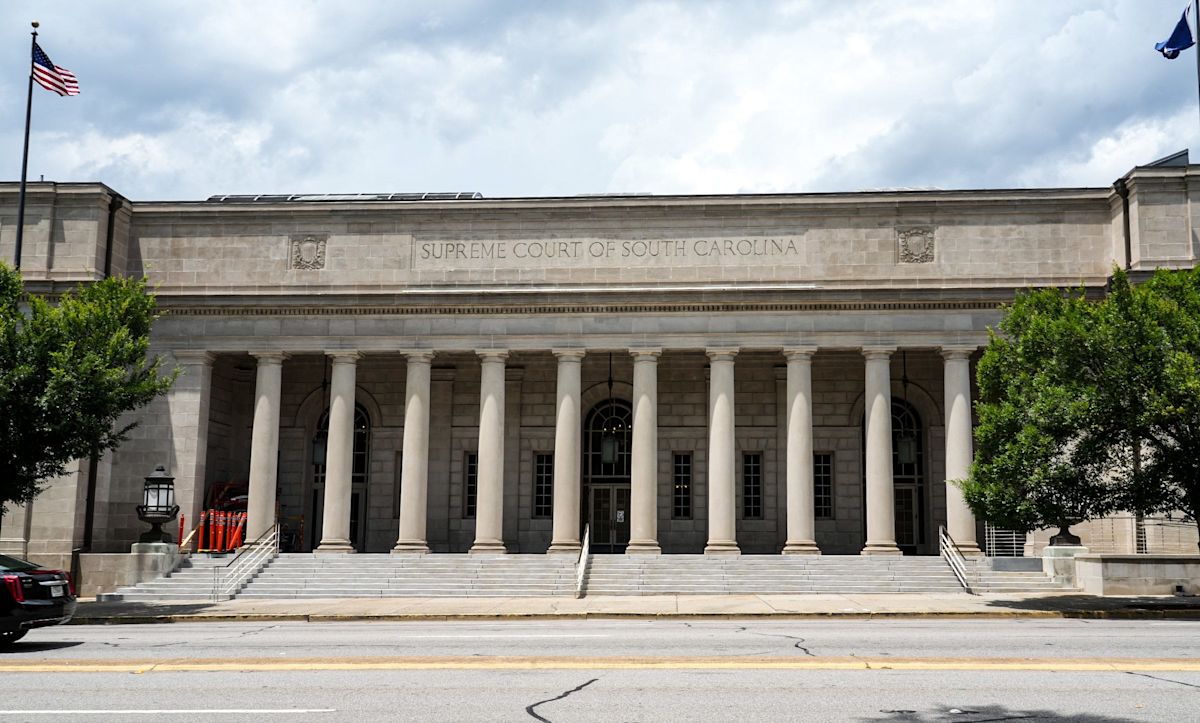
The South Carolina Supreme Court took its bench to Clemson University on Sept. 15, opening a landmark two-day series of oral arguments aimed at increasing public transparency and fostering broader civic understanding of the state judicial system. The traveling session represented the first time in history that the state’s top appellate body conducted official proceedings on the Clemson campus.
University leaders welcomed the proceedings as an educational milestone for the student body and the wider public. Clemson President Benjamin Ayers emphasized the educational value of hosting the state's highest court, pointing out that the public sessions allow citizens to observe the judicial mechanism firsthand while helping students bridge theoretical coursework with the direct functions of state government and legal leadership.
At the center of the opening day's docket was a contentious legal challenge stemming from Gov. Henry McMaster's decision in 2025 to dispatch South Carolina National Guard troops to Washington, D.C. The deployment occurred in coordination with an initiative led by President Donald Trump focusing on anti-crime efforts within the federal capital district.
South Carolina’s participation in the federal mission was part of a coordinated push among several conservative state executives. During the same period in 2025, governors from other southern states, including Louisiana, Mississippi, and Tennessee, similarly mobilized and directed units of their own respective national guard forces to bolster operations in Washington.
The deployment subsequently triggered legal action within South Carolina, leading to a lawsuit initiated by the South Carolina Public Interest Foundation alongside Navy veteran James Weninger. The complaint formally named Gov. McMaster and Maj. Gen. Robert B. Stilwell, who serves as the adjunct general of the South Carolina National Guard, as the named defendants in the litigation.
In challenging the executive order, the plaintiffs asserted that the governor exceeded his constitutional and statutory remit. They argued that activating state guard members and dispatching them beyond state lines to conduct policing duties in the nation's capital constituted an unlawful exercise of executive power.
During the roughly hour-long hearing, the justices probed the scope of executive authority and the boundaries of judicial oversight. Chief Justice John Kittredge closely questioned Allen Chaney, the legal director for the ACLU of South Carolina, who appeared before the high court on behalf of the plaintiffs challenging the activation.
Kittredge pressed Chaney on whether the governor maintains inherent discretionary authority to determine the timing, location, and circumstances under which the South Carolina National Guard should be mobilized. The chief justice also raised fundamental concerns regarding the separation of powers doctrine, questioning whether the judiciary holds the appropriate jurisdiction to direct the state's chief executive on the execution of his administrative responsibilities.
In response, Chaney clarified the core objective of the lawsuit, explaining that the legal challenge is not designed to evaluate whether the policy decision to send troops to Washington was politically prudent or ill-advised. Instead, he argued, the matter rests entirely on statutory interpretation and whether existing law granted the governor the legal authorization to deploy troops under those particular circumstances.
Addressing the separation of powers concerns raised from the bench, Chaney argued that judicial review remains vital when executive actions are called into question. He maintained that the state constitution stands as the supreme governing authority and that the courts bear the obligation to ensure executive conduct aligns with constitutional boundaries.
Defending the administration's actions, Grayson Lambert, serving as legal counsel for the governor, argued that McMaster was acting well within the traditional bounds of his executive responsibilities. Lambert asserted that as the commander in chief of South Carolina’s military forces, the governor possesses broad constitutional authority to deploy the guard.
Lambert further contended to the justices that the 2025 mission to Washington, D.C. falls comfortably within the statutory and constitutional framework granted to the executive branch. Following the conclusion of oral arguments, the justices adjourned without issuing an immediate decision, leaving the legality of the deployment pending a future written opinion.
Beyond the military deployment dispute, the justices heard oral arguments in a separate high-profile matter on the Clemson campus. That case centered on an ongoing legal conflict between Thomas Ravenel and Kathryn Dennis, both known for their appearances on the Bravo reality television series Southern Charm.
The court's special session at Clemson is scheduled to proceed through Sept. 16 with additional appellate arguments. The docket for the second day includes a criminal procedure appeal from Horry County concerning a defendant's right to testify during trial proceedings.
The justices are also scheduled to review an Anderson County product liability lawsuit centered on damages resulting from an exploding lithium battery, completing the historic two-day judicial event on the university campus.





(0)