
Throughout modern history, September 13 has repeatedly served as a backdrop for pivotal occurrences that altered governance, warfare, international diplomacy, and culture. Spanning more than two centuries, the date encompasses defining chapters in American identity, devastating wartime destruction, groundbreaking legislative milestones, and catastrophic natural disasters across the globe.
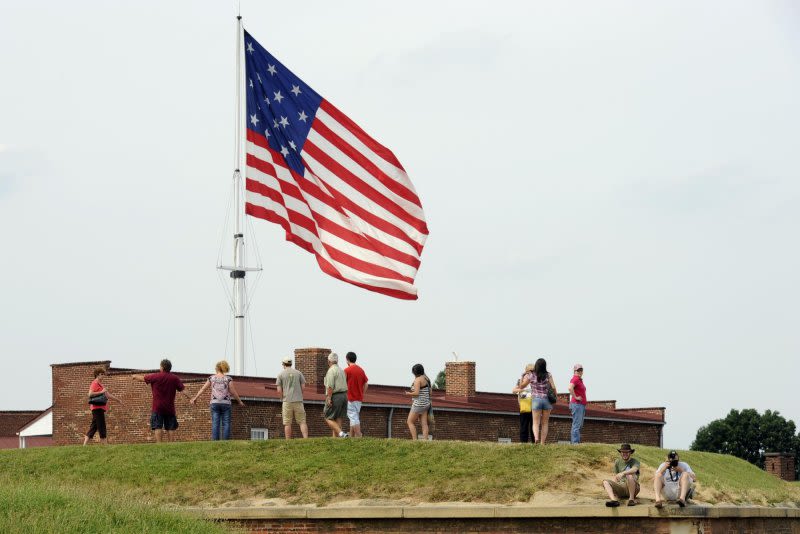
The earliest of these historic events occurred during the War of 1812. On September 13, 1814, British naval forces launched a fierce bombardment against Fort McHenry in Baltimore, Maryland. Amid the intense overnight attack that lasted into the following morning, an American lawyer and poet named Francis Scott Key witnessed the battle and penned the stirring verses that would ultimately become the United States national anthem, "The Star-Spangled Banner."
Key’s written reflection captured the defense of the Baltimore fort, turning a tense military standoff into an enduring symbol of American resilience. The battle at Fort McHenry proved to be a decisive engagement, and Key's lyrics permanently documented the sight of the flag surviving the British onslaught.
More than a century later, wartime turmoil once again placed September 13 at the center of global attention. In 1940, during the height of the German Blitz over London, an aerial bombing struck and demolished the royal chapel at Buckingham Palace. The monarch’s residence faced repeated danger throughout the Second World War, ultimately coming under enemy attack nine distinct times.
The destruction of the chapel served as a stark illustration that even the highest seats of British leadership were not insulated from the perils of total war. Just ten days following the strike on the palace, King George VI addressed the public, firmly condemning the "wickedness against which we fight" and reinforcing national resolve amid the devastating bombing campaign.
Turning to American political history, September 13, 1948, marked a transformative breakthrough for women in legislative governance. Republican Margaret Chase Smith of Maine won election to the United States Senate, becoming the first woman in the nation's history to serve in both the House of Representatives and the Senate.
Smith’s landmark electoral victory established an unprecedented path for female lawmakers in Washington. Having previously represented Maine in the House, her transition to the upper chamber broke traditional barriers and expanded the role of women in national policy debates during the early Cold War era.
Decades later, state governance faced a grave domestic crisis. On September 13, 1971, New York state forces launched an armed assault to retake control of the Attica state prison following a violent inmate uprising. The operation ended four days of high-stakes negotiations and chaotic unrest inside the maximum-security correctional facility.
The state’s tactical intervention at Attica resulted in the deaths of 43 people, including both inmates and hostages. The tragic outcome turned the facility's name into a national symbol of the intense friction surrounding institutional authority, penal standards, and inmate rights in the United States.
International diplomacy achieved a major milestone on September 13, 1993, when Israeli Prime Minister Yitzhak Rabin and Palestine Liberation Organization Chairman Yasser Arafat gathered for a momentous ceremony at the White House. The two leaders signed a formal declaration of principles aimed at establishing a framework for interim Palestinian self-rule.
The historic agreement, known as the Oslo framework, represented an unprecedented diplomatic effort to foster mutual recognition and de-escalate decades of hostilities in the Middle East. The iconic handshake between Rabin and Arafat on the White House lawn symbolized a hopeful, though challenging, pathway toward regional stability.
The cultural sphere witnessed a significant loss on September 13, 1996, when prominent rapper and actor Tupac Shakur died in Los Angeles. The influential musical figure succumbed to his injuries six days after being targeted and critically wounded in a drive-by ambush on September 7, leaving behind a complex legacy that continues to influence modern hip-hop culture.
In 2001, September 13 marked an uneasy first step toward normalcy following the catastrophic September 11 terrorist attacks in New York City and Washington, D.C. Commercial airlines across the United States were permitted to resume flight operations after a unprecedented grounding of civil aviation, though airports immediately enacted sweeping and rigorous security mandates.
Six years later, on September 13, 2007, international human rights law expanded significantly when the United Nations General Assembly adopted the Declaration on the Rights of Indigenous Peoples. Although the measure was opposed by the United States and remained non-binding, it established a global standard prohibiting discrimination against Indigenous communities.
The landmark United Nations document comprehensively affirmed individual and collective protections for Indigenous groups worldwide. Its provisions outlined essential safeguards covering cultural preservation, language preservation, education, healthcare access, and employment rights.
Nature’s destructive power rounded out the historical significance of the date when Hurricane Ike made landfall on September 13, 2008. The powerful storm battered Galveston and Houston, Texas, unleashing torrential rain and ferocious winds of 110 mph that triggered massive storm surges across coastal communities.
The severe weather forced roughly one million residents to evacuate their homes and knocked out electricity for millions across the Gulf Coast region. In the aftermath, officials reported that Hurricane Ike claimed more than 100 lives in the United States and roughly 75 fatalities in Haiti, standing as one of the costliest and deadliest tropical systems of the era.


(0)