
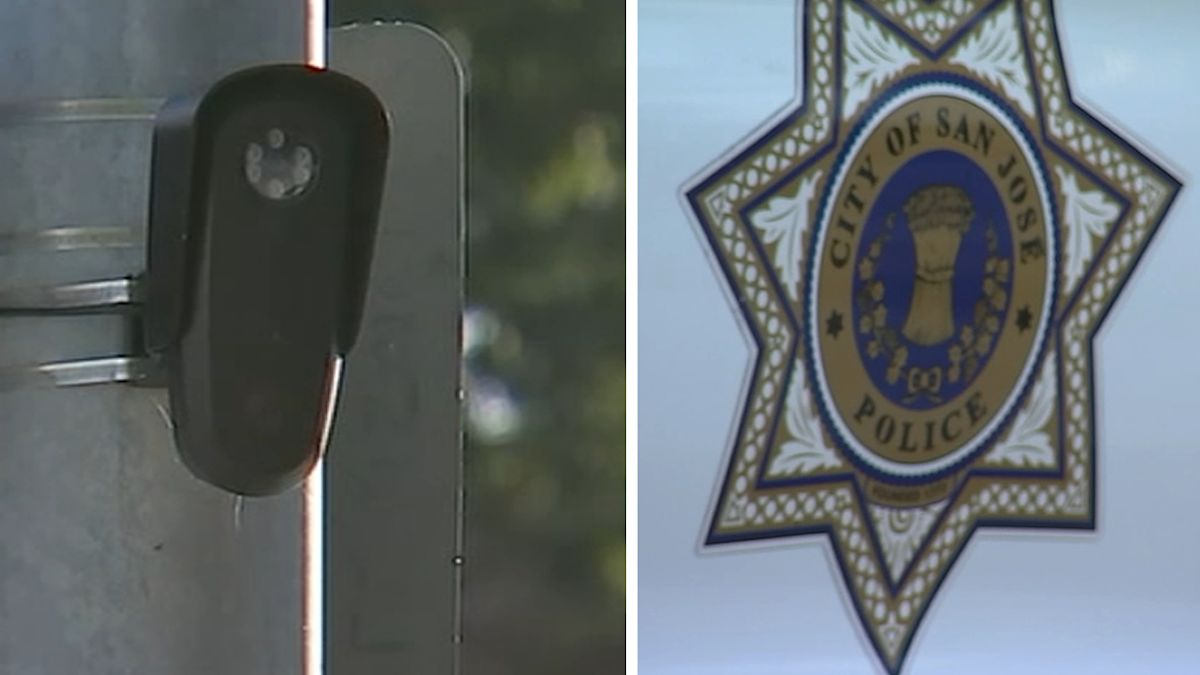
A San Jose police officer has been fired from the department after an internal investigation revealed he improperly accessed automated license plate reader data and provided the sensitive location details to a relative accused of domestic violence.
According to the San Jose Police Department, the officer logged into the municipality's Flock camera network using his personal smartphone. After extracting vehicle location information from the surveillance database, he passed the records along to his cousin, who was named as a suspect in an open domestic abuse investigation.
The cousin subsequently used the leaked vehicle location information to track down his accuser, according to reporting from the Bay Area News Group. The breach has triggered substantial concern regarding the administrative safeguards and oversight surrounding automated law enforcement databases.
San Jose Police Chief Paul Joseph addressed the dismissal in an official statement, emphasizing that the department maintains strict standards regarding officer conduct and public integrity. He noted that breaches of this magnitude compromise the core mission of law enforcement.
"When an officer violates the public's trust this severely, my responsibility is clear: that person cannot remain in a position of police authority, and they cannot wear the San Jose badge," Joseph said. The police chief added that while automated license plate reader technology is relatively new, the high ethical standard demanded of officers is not.
Following the breach, the department implemented several operational adjustments to prevent future abuses. Officials announced that officers are strictly barred from accessing the Flock camera network on personal mobile devices, and department personnel have received formal reminders outlining the severe repercussions associated with the unauthorized handling of surveillance data.
In addition to restricting device access, the department confirmed it is currently piloting advanced smart auditing tools. These monitoring utilities are designed to automatically evaluate system queries and flag any instances where database records are accessed without a legitimate, lawful law enforcement purpose.
Chief Joseph confirmed that the former officer's case has been formally submitted to the State of California Commission on Peace Officer Standards and Training for a decertification investigation. A successful decertification proceeding would strip the individual of his peace officer credentials, permanently disqualifying him from working in law enforcement within the state of California.
Despite the improper data access and the subsequent tracking of the accuser, neither the former officer nor his cousin currently faces criminal charges. Legal experts note that the lack of prosecution underscores a significant statutory loophole in how state laws regulate internal data misuse by authorized users.
Steven Clark, a legal analyst and former prosecutor, explained that existing penal codes targeting the unlawful breach of confidential law enforcement databases do not neatly apply to personnel who possess valid administrative access. Because the officer held system authorization, his improper search did not clearly violate existing criminal statutes.
"Because the officer technically had authorization to go into the database, even though he misused it, he did not commit a crime. But I think that's where we need to play catch up," Clark stated. He indicated that the incident is likely to prompt state lawmakers to draft new legislation specifically criminalizing this form of internal data misuse, noting that the officer's conduct slipped through the cracks of the current legal system.
The dismissal comes as the use of Flock cameras faces broader legal and public scrutiny across Northern California. In 2025, the Electronic Frontier Foundation and the American Civil Liberties Union filed a joint lawsuit against the city of San Jose and the police department, contending that the automated camera network infringes upon the constitutional privacy rights of the public.
Last month, a judge issued a tentative ruling supporting the city's position, though the litigation remains open and unresolved pending subsequent legal proceedings. Clark observed that privacy advocates will likely present the San Jose data leak as "exhibit A" to demonstrate the inherent privacy and safety risks posed by expanding license plate reader networks.
San Jose currently maintains a network of nearly 500 Flock cameras installed across the city. The technology has generated continuous regional debate, leading the San Jose City Council to approve measures restricting Flock camera data and usage, while Santa Clara County recently moved to halt Flock Safety camera operations across multiple jurisdictions due to persistent privacy concerns.
The security incident has drawn varied reactions from local community members who question whether their daily movements are adequately protected. San Jose resident Lina De Marco expressed unease about data management, remarking that the widespread monitoring makes her feel less safe and resembles mass surveillance.
Conversely, other residents maintain that automated license plate readers remain valuable tools for suppressing crime throughout municipal neighborhoods. San Jose resident Binh Nguyen expressed support for the network, noting that continuous, round-the-clock camera monitoring serves as an effective deterrent against unlawful behavior.






(0)