
Across the state of Iowa, a growing architectural movement is breathing new life into long-standing landmarks by converting them into much-needed affordable housing developments. Rather than letting venerable facilities sit empty or facing the wrecking ball, developers and community advocates are transforming historic community anchors into modern living spaces. These conversion projects represent a creative bridge between preserving the state’s rich structural past and addressing critical community needs.
Data released by the Iowa Finance Authority underscores the unique architectural landscape of the state, revealing that Iowa possesses the eighth-oldest residential building stock in the United States. With the median year of residential construction recorded as 1957, the state maintains a deep inventory of aged and underutilized physical properties. This demographic and structural reality has prompted builders and community organizations to rethink traditional development models in favor of sustainable restoration.
Instead of directing capital solely toward ground-up new construction, property developers throughout the state are increasingly turning to adaptive reuse strategies. This method allows builders to capitalize on the substantial volume of vacant and historic properties that already exist across Iowa's towns and cities. By utilizing existing foundations and structural frameworks, these initiatives seek to alleviate housing shortages while simultaneously retaining the distinctive historic character of local neighborhoods.
Among the prominent examples of this statewide trend is an ambitious renovation in Waterloo, where a 102-year-old Catholic church and school complex is being reimagined as a residential property. The expansive institutional facility, which once bustled with parishioners and students over a century of service, is now slated to provide stable and affordable accommodations for local community members.
In Des Moines, another high-profile initiative involves the comprehensive rehabilitation of a nearly 130-year-old former U.S. Army post. This centuries-old military installation, steeped in local and national history, is being systematically converted from its former defense-oriented role into a civilian residential enclave designed to expand the capital city's pool of accessible living options.
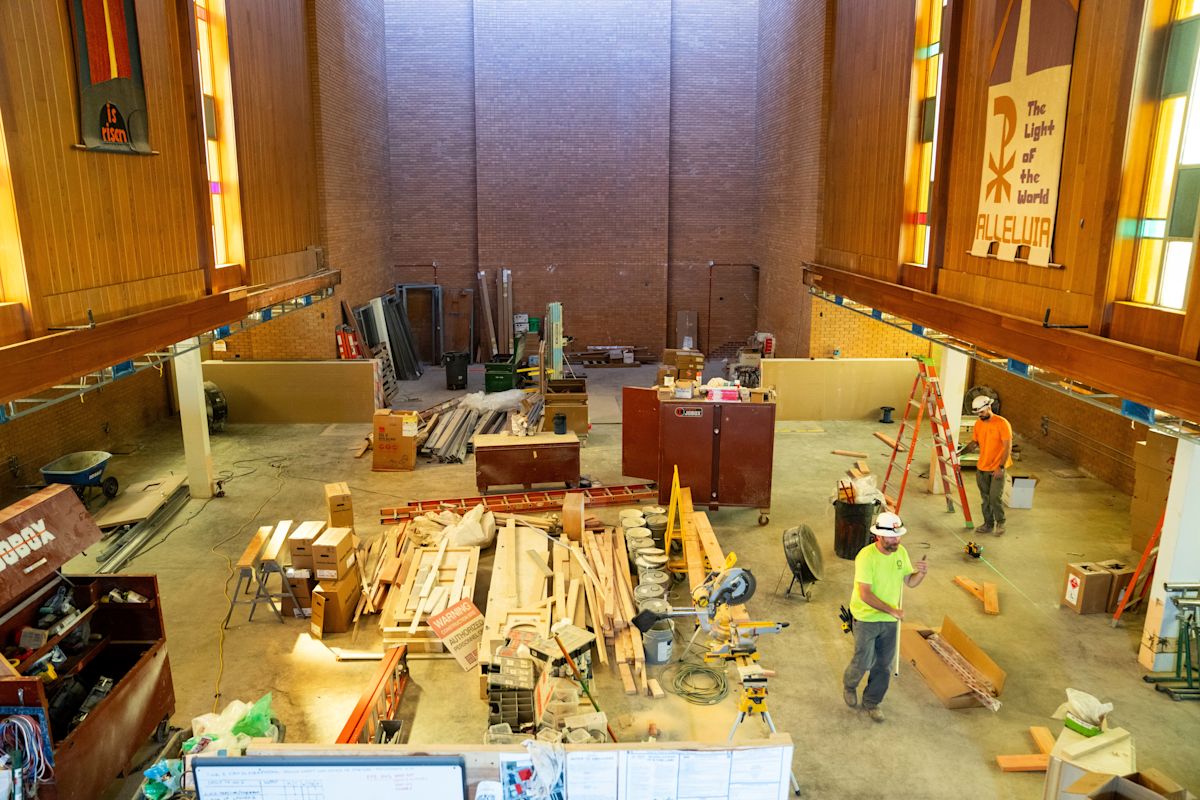
Similarly situated near the center of state government, a 69-year-old Lutheran church standing just blocks away from the Iowa State Capitol is undergoing an extensive structural reinvention. The property, previously recognized as the home of Elim Christian Fellowship, is being transformed to serve as a vital community sanctuary of a different sort by addressing modern residential deficits.
A significant project currently underway at the former church site is "Stay," an initiative spearheaded by the community organization Starts Right Here. Established by founder Will Keeps, the organization is actively renovating the religious building to establish dedicated housing and educational facilities for at-risk youth. The ongoing redevelopment aims to establish safe, predictable, and supportive environments for young people facing housing insecurity.
The project represents a crucial intersection of historic preservation and targeted social advocacy. By reconfiguring the spacious interior of the former church into independent, affordable youth living quarters, the Stay initiative intends to provide vulnerable young residents with the physical stability necessary to pursue personal development and educational opportunities.
Construction progress at the Des Moines facility illustrates the detailed work required to transition institutional spaces into individual living units. Crews have been active on-site turning open fellowship halls, classrooms, and administrative offices into self-contained residential units equipped to meet standard domestic needs, ensuring the space remains both functional and welcoming.
In addition to private living units, the Starts Right Here development integrates supportive educational facilities directly within the residential blueprint. This holistic design ensures that youth residing in the facility can readily access developmental guidance, life-skills training, and educational programming without leaving the property, reinforcing the community-centered purpose of the original institution.
The broader shift toward adaptive reuse across Iowa carries notable economic and urban planning advantages. Converting established properties frequently allows developers to take advantage of existing municipal infrastructure, including established road networks, water systems, and utility grids. This approach minimizes the civic expenditures often associated with constructing sprawling new developments on raw land.
Furthermore, repurposing historic and underutilized facilities helps to prevent blight and preserves the aesthetic legacy of Iowa's urban and rural neighborhoods. When iconic civic, military, or religious structures fall out of active use, their deterioration can adversely affect surrounding property values and community morale. Reinvesting in these landmark buildings restores them as productive assets that strengthen the surrounding neighborhood fabric.
From an environmental standpoint, utilizing existing building shells significantly reduces the demand for new construction materials and cuts down on demolition waste destined for regional landfills. The embedded energy within these historic brick-and-mortar structures is preserved, offering a sustainable alternative to conventional building practices while producing modern living environments.
As developers continue to evaluate underused churches, former military posts, and former academic institutions across the state, Iowa's approach illustrates how historic preservation and affordable housing strategies can align. By transforming aging architectural assets into secure homes, these projects ensure that the state's storied buildings will continue to serve their communities for generations to come.




(0)