
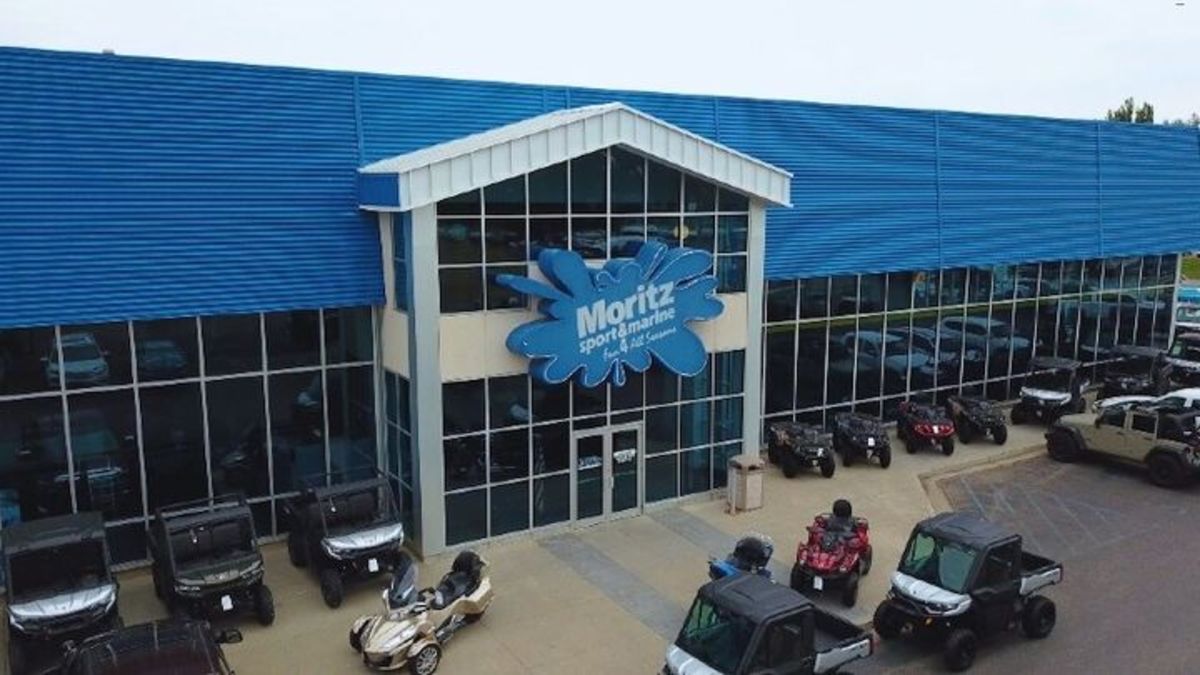
Applying traditional automotive sales strategies to the powersports showroom floor has yielded substantial financial dividends for Eric Moritz. At Moritz Sport & Marine, located in Bismarck, North Dakota, the dealership has transformed standard utility terrain vehicle retailing by adopting the structured sales processes commonly seen across major franchised car dealerships.
The dealership's sales figures reflect the effectiveness of this commercial approach. Moritz Sport & Marine currently retails roughly 300 brand-new side-by-side units every year. This specific product category alone accounts for approximately $10 million in annual revenue for the Bismarck operation, representing a massive cornerstone of its overall business model.
Beyond the showroom floor for factory-fresh models, the dealership maintains an equally robust pre-owned department. Alongside the 300 new side-by-sides, the business processes and delivers between 200 and 300 used all-terrain vehicles and utility task vehicles annually, capturing buyers across diverse price brackets and ownership needs.
The foundation for this operational structure dates back nearly three decades. Eric Moritz and his father originated from the automotive retail sector, bringing foundational car-sales experience to the powersports market. That automotive background led them to acquire a local Bismarck Chevrolet dealership, which they converted into Moritz Sport & Marine upon founding the enterprise in 1997.
The dealership's deep alignment with automotive methodologies was further reinforced during a pivotal leadership change in 2020. When Moritz's father retired, equity in the business was acquired by friends who also owned automotive dealerships in the surrounding area, ensuring that modern automotive management principles remained central to the company's long-term vision.
Moritz views the broader powersports marketplace as lagging noticeably behind the automotive sector. According to his operational assessment, the powersports retail space remains approximately five years behind the car industry, particularly in how daily business workflows are managed, as well as in certain technological integrations.
To close that gap, the Bismarck retailer overhauled the customer purchasing journey to mirror an automotive showroom. Rather than navigating disconnected departments, shoppers at the store engage with an integrated, full-service sales desk that centralizes every critical step of the buying cycle into a single, cohesive customer interaction.
During this consolidated desk consultation, a prospective buyer interacts simultaneously with the sales manager, service personnel, finance representatives, and dedicated accessories specialists. This all-in-one format allows customers to discuss financing, protective warranties, maintenance planning, and custom outfitting without stepping away from the transaction table.
The overarching goal of this structured sales model is customer retention and comprehensive outfitting. Moritz emphasizes that car dealerships excel at building sustained, long-term relationships while ensuring that buyers drive away with all desired features already installed on their vehicles rather than returning later for aftermarket additions.
The product lineup has played a critical role in supporting this high-volume business model, led predominantly by the Can-Am Defender platform. Full-cab configurations of the Defender have established themselves as the store's primary revenue engine, surpassed within the broader business only by its marine offerings.
The evolution of the dealership's side-by-side volume over the last decade illustrates a remarkable trajectory. Prior to the launch of the Can-Am Defender roughly ten years ago, Moritz Sport & Marine moved only 10 to 15 new side-by-side units each year, representing a minor fraction of its modern retail throughput.
To keep pace with the influx of deliveries and complex accessory installations, the dealership has substantially reinforced its back-of-house operations. The company's dedicated Can-Am service department has doubled its technician headcount in recent years, growing into a specialized team of 12 service professionals.
Consumer demand for these machines is increasingly driven by comfort features that rival traditional pickup trucks. Fully enclosed cabs equipped with factory heating and air conditioning systems have turned utility terrain vehicles into viable daily transportation choices for North Dakota drivers seeking year-round usability.
State regulations have significantly contributed to the practical appeal of these utility machines. Under North Dakota law, off-highway vehicles can be legally operated on paved roads outside of major highway corridors. By equipping vehicles with a street-legal kit—comprising turn signals, a horn, rearview mirrors, and a license plate—owners can secure statewide street legality.
Despite the strong sales momentum, rising equipment costs present an ongoing concern for dealership management. As manufacturers introduce more premium features, heavily optioned modern side-by-sides are now commanding retail prices that approach the $50,000 threshold, requiring careful inventory and customer management.
Looking ahead, Moritz remains measured regarding alternative powertrains, keeping a close eye on the market following the summer debut of the Can-Am Outlander Electric. For now, the dealership is refraining from an immediate electric push, citing concerns over limited battery driving range, underdeveloped charging infrastructure, and the high capital investment required for specialized workshop tools and technician electrical training.


(0)