
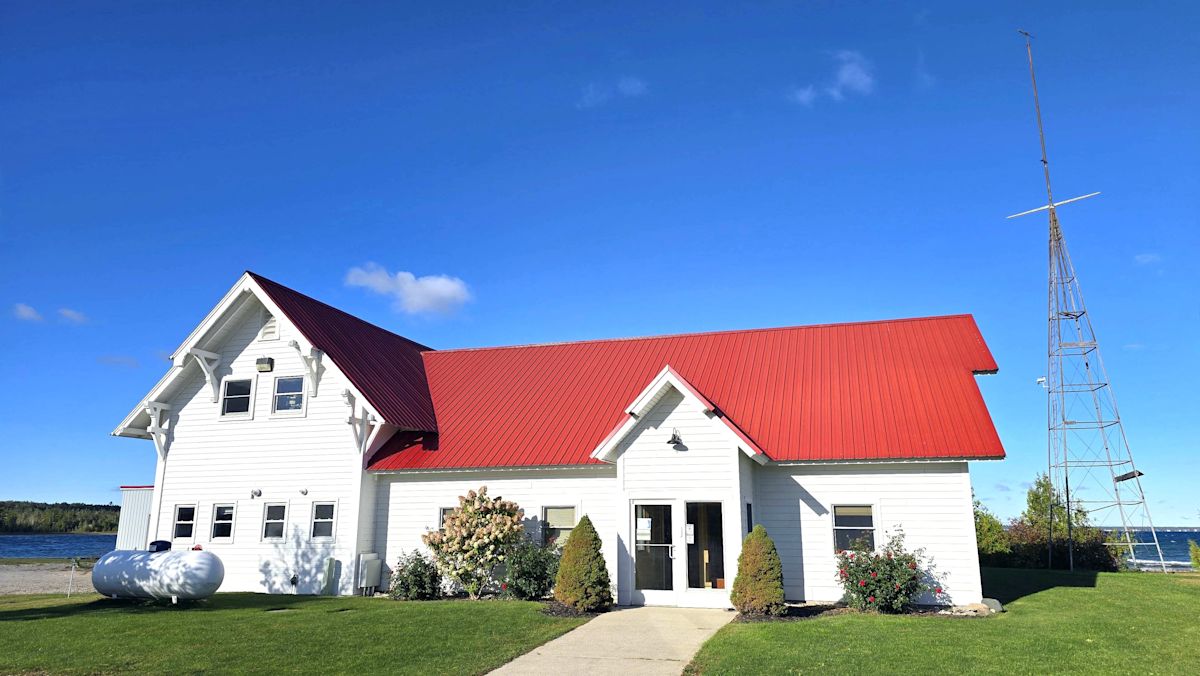
A landmark research and maritime heritage facility situated along the shoreline of Lake Huron is preparing to celebrate a century and a half of service. On Sept. 30, the Hammond Bay Biological Station will officially commemorate its 150th anniversary, marking a dynamic history that encompasses maritime rescue operations, military coastal defense, and innovative fisheries science.
The upcoming anniversary will be commemorated through a series of public events aimed at providing the regional community with a comprehensive look at the facility's legacy. Organizers have scheduled daytime public tours of the biological station in Millersburg, followed by an evening retrospective presentation in Rogers City exploring the site's rich heritage and its ongoing research role.
Located along northeastern Michigan's coast, the Hammond Bay Biological Station holds a distinctive place in Great Lakes history. Over the past 150 years, the installation has continually evolved to meet the emerging needs of the region, transforming from an early maritime outpost into a leading center dedicated to freshwater research and aquatic resource stewardship.
The facility's historical lineage began in 1876, when it was established as a station under the U.S. Life-Saving Service. During this era, waterborne transit on Lake Huron was vital to commerce, but navigating the waters off northeastern Michigan posed immense hazards to mariners contending with unpredictable weather and dangerous navigational conditions.
Operating during an era before advanced maritime communication and navigation tools, the life-saving personnel stationed at Hammond Bay carried out critical emergency missions. Station crews stood ready to assist distressed vessels navigating hazardous waters, deploying lifeboats and rescue apparatus to protect lives along the Lake Huron coastline.
In 1915, the station entered its next historical chapter when the U.S. Life-Saving Service was merged into the newly formed U.S. Coast Guard. Under Coast Guard administration, the Hammond Bay property maintained its essential public safety role, continuing to support coastal defense, navigation security, and emergency operations for decades.
A fundamental transformation occurred in 1950, when the site was decommissioned as a Coast Guard installation and converted into the Hammond Bay Biological Station. This transition marked an important strategic shift, turning the historic waterfront location into an active scientific center focused directly on fisheries research and ecological conservation.
Following its establishment as a biological station, the facility concentrated substantial scientific resources on combating the ecological threat posed by invasive sea lampreys. The destructive parasite had severely damaged native fish stocks across the Great Lakes, making targeted intervention and control research a vital regional priority.
Scientific work conducted at Hammond Bay has since played an instrumental role in developing strategies to suppress invasive sea lamprey populations. According to event organizers, this ongoing fisheries research has provided critical support for the long-term restoration and protection of fish species throughout the broader Great Lakes basin.
To commemorate these 150 years of continuous service, the biological station will welcome the public for guided tours on Sept. 30. The station, located at 11188 Ray Road in Millersburg, will provide visitors with an opportunity to see its working facilities firsthand during three scheduled afternoon tour sessions.
The public tours are set to run at 1:00 p.m., 2:00 p.m., and 3:00 p.m. on the day of the celebration. Because tour group sizes are limited, advance registration is required for all visitors wishing to attend, with reservations available by emailing msigmon@glfc.org or by calling 989-734-4768, extension 112.
Following the daytime open house in Millersburg, the anniversary programming will continue in Rogers City with a formal evening presentation. Scheduled for 6:00 p.m. at the Rogers Theater, located at 257 N. 3rd St., the program will explore the historical narrative of the station alongside discussions about its future research objectives.
The evening event will commence with welcoming remarks from Marc Gaden, executive secretary of the Great Lakes Fishery Commission, along with Lauren Holbrook, a communications associate at the Hammond Bay Biological Station, who will introduce the night's proceedings to attendees.
The historical presentation will feature remarks from a panel of speakers with deep ties to the station and the local community. Scheduled presenters include former Rogers City Mayor Beach Hall, Hammond Bay Biological Station supervisor Nick Johnson, and science communication specialist Andrea Miehls.
Organizers noted that the milestone observance aims to honor the station's long record of public service, its historical evolution, and its deep connection to the Great Lakes and neighboring communities. The evening program will conclude by reflecting on 150 years of maritime and ecological history while emphasizing the station's enduring mission in fisheries science and stewardship.







(0)