
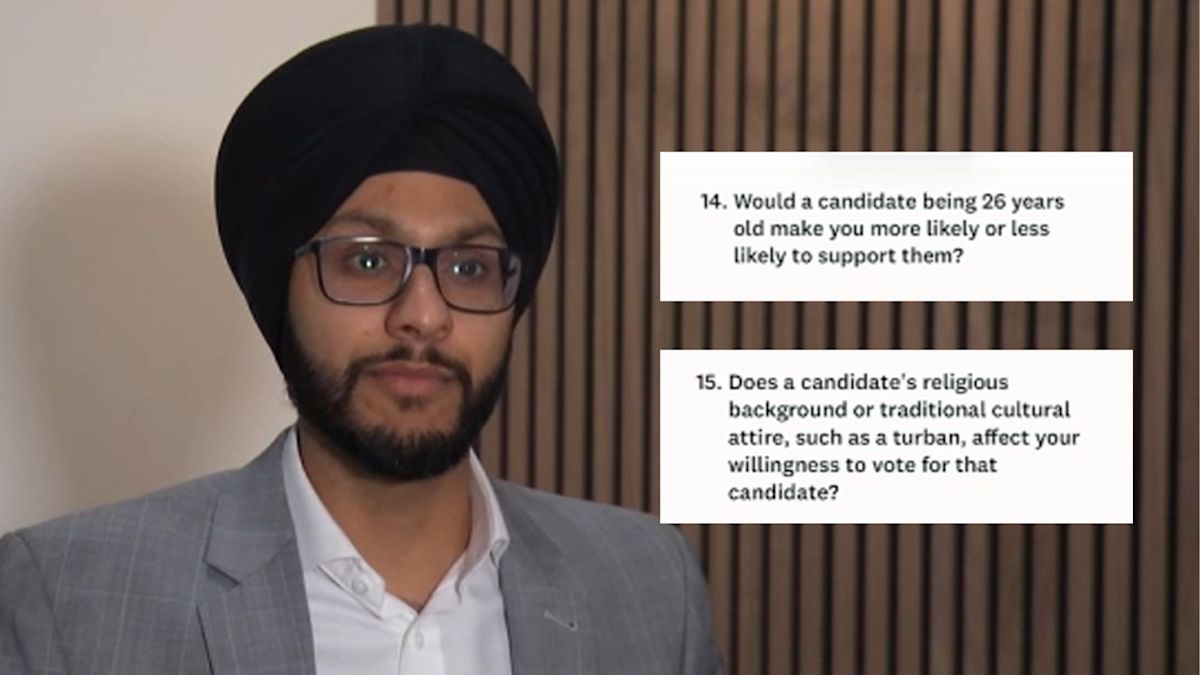
Local political campaigns often turn fierce as Election Day approaches, but a recent digital survey in Central California has sparked significant backlash for crossing into personal identity and religious heritage. In Fresno’s City Council District 7 race, tensions flared after voters were prompted to participate in an online questionnaire that specifically scrutinized a candidate's faith, ethnicity, and age.
The controversy centers on an 18-question poll distributed through the SurveyMonkey platform, which has since been deactivated following widespread attention. Sent out to local constituents with fewer than 50 days remaining before the upcoming midterm elections, the survey prompted immediate scrutiny across the district due to its focus on demographic and cultural traits rather than municipal policy.
At the heart of the dispute is District 7 candidate Nav Gurm, a 26-year-old practicing Sikh and Fresno native who works as an attorney. Gurm found himself the subject of multiple inquiries within the poll that evaluated whether his background, youthful age, and cultural traditions would deter voters from supporting his bid for a seat on the city council.
Among the most pointed items in the questionnaire was a direct inquiry regarding Gurm’s traditional Sikh religious attire. The survey specifically asked participating voters whether a candidate’s religious background or the practice of wearing traditional cultural clothing, such as a turban, would influence or lessen their willingness to cast a ballot in that candidate's favor.
Gurm openly addressed the questionnaire, affirming that his Sikh identity has long been an integral part of his life and public presence. He noted that throughout his life and campaign, his traditional attire had not previously been raised as a public concern, adding that he remains deeply proud of his Sikh faith and his identity as a Sikh American.
Reflecting on the tone and content of the questionnaire, Gurm observed a noticeable shift in contemporary electoral culture. He pointed out that personal faith, cultural markers, and private heritage were historically treated as off-limits topics in political discourse, but that standard has undergone dramatic changes in modern political environments.
Despite the personal nature of the inquiries, Gurm expressed confidence in his ability to withstand political attacks. He emphasized that maintaining resilience is essential in public life, explaining that having thick skin allows him to remain focused on the campaign despite hearing remarks designed to provoke or undermine him.
The controversial poll also prompted a swift reaction from Gurm’s opponent in the District 7 race, Ariana Martinez Lott. Rather than capitalizing on the friction, Martinez Lott made it clear that she firmly rejects and denounces discriminatory behavior, demonstrating that certain ethical standards should remain intact regardless of campaign rivalries.
Martinez Lott explicitly stated that she stands against any form of attack rooted in prejudice, emphasizing that she opposes any kind of racist actions aimed at anyone, including her direct political opponent. Her comments presented a unified rejection from both candidates against incorporating racial and religious bias into the council contest.
Questions regarding the origin and motivation behind the poll quickly surfaced following its release. According to Gurm, the survey was linked to an entity called Political Opinion Research, an organization that describes itself on its web page as a Michigan-based data-gathering and analysis firm specializing in phone-based polling.
However, an examination of the research company's digital footprint raised doubts about its operations. A review conducted by Action News uncovered several notable irregularities on the firm's website homepage, including inconsistent font styles and noticeable spelling mistakes that undermined its presentation as an established analytical organization.
In addition to questions about outside entities, Gurm faced inquiries regarding whether the survey might have been orchestrated internally as a strategic maneuver to generate campaign visibility and public sympathy. Such tactics, though speculative, are occasionally discussed in highly competitive local races looking for wider media coverage.
Gurm decisively rejected the notion of any self-orchestrated campaign stunt, citing full transparency in his electoral spending. He explained that every dollar allocated by his campaign is subject to public disclosure and insisted that no campaign funds had been directed toward research or polling, as their resources are strictly prioritized for direct voter outreach.
Reiterating his ethical stance, Gurm maintained that he considers such underhanded publicity tactics completely out of bounds for his campaign. He emphasized that his campaign strategy relies on genuine community engagement rather than manufactured controversy, calling the inquiry fair but stating definitively that he is well above such methods.
The surfacing of the survey, which first landed in voters' hands roughly two weeks before drawing broad public notice, underscores the heightened atmosphere surrounding local governance races. With the midterms rapidly approaching, both candidates are navigating an increasingly charged environment where community focus often shifts between municipal issues and polarizing personal debates.
As District 7 voters prepare to cast their ballots in the coming weeks, the fallout from the closed survey highlights ongoing questions about the boundaries of political campaigning. While the origin and strategic intent behind the poll remain questionable, the unified condemnation of religious and racial targeting signals a shared line that local candidates refuse to cross.





(0)