
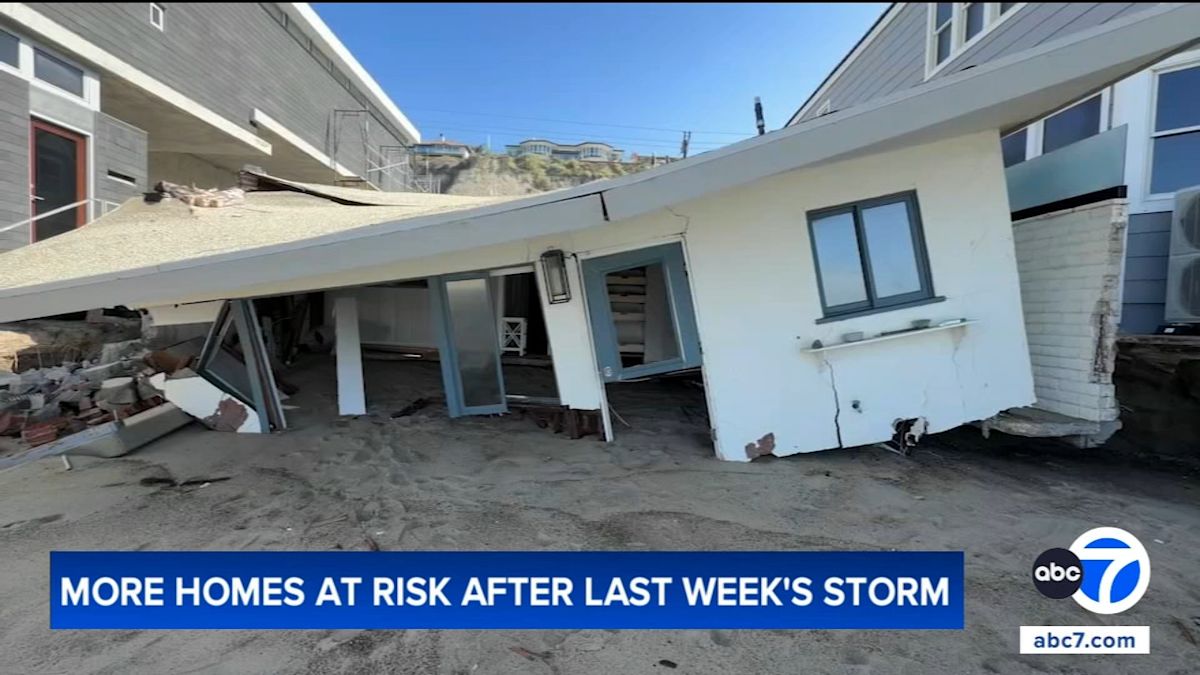
A severe coastal crisis is unfolding along the Southern California coastline, where another oceanfront home has begun sliding into the Pacific Ocean following powerful storm activity. In the vulnerable Capistrano Beach community within the city of Dana Point, local authorities have deemed multiple residential properties unsafe for habitation, leaving distraught homeowners to face devastating structural damage while voicing sharp frustration over what they describe as a lack of government intervention.
The recent destruction comes in the wake of high-energy ocean swells pushed ashore by Hurricane Marie. Even though the primary weather system and its peak swells have moved past the region, the aftermath has left the shoreline severely destabilized. Waterfront residences that have stood along the coast for years are now experiencing severe foundation loss, with incoming tides continuously eroding the ground beneath them and causing persistent structural failures throughout the neighborhood.
Among the hardest-hit residents along Beach Road are Amy and Chris Rogers, who saw the rear portion of their house torn apart by the pounding ocean surf. The couple's back deck was completely ripped away by the waves, leaving their kitchen exposed directly to the open sea. Their situation reflects the extreme physical dangers confronting residents along this beachfront strip as the ocean steadily encroaches upon private living spaces.
The emotional toll on local families has been profound. The Rogers described moving through the seven traditional stages of grief over a four-day span as they watched the damage escalate. While initial shock gave way to tears, their sorrow has increasingly transformed into anger. They contend that the loss of neighborhood properties was largely preventable and has been exacerbated by a prolonged absence of proactive shoreline maintenance and supportive policies.
In response to the expanding structural damage, the city of Dana Point has taken administrative action by declaring a local emergency. Municipal building officials surveying Beach Road have placed red tags on 10 residences, officially condemning them as unsafe to enter or occupy. Furthermore, inspectors have issued yellow tags for seven other properties, restricting access due to significant structural damage and lingering hazards.
Despite the local emergency proclamation, residents say they have received virtually no tangible support on the ground. Frustrated property owners report an absence of physical cleanup assistance, financial aid, or coordinated emergency management from any level of government, whether municipal, county, state, or federal. Just one week into the aftermath of the storm, neighbors witnessed yet another adjacent home collapse into the water without any emergency intervention taking place.
Homeowners argue that existing coastal regulations have systematically prevented them from taking necessary steps to shield their properties against marine erosion. For years, environmental guidelines and permitting requirements have restricted the types of protective barriers private citizens can install. Residents assert that while they have tried desperately to protect their beachfront investments, their efforts have been continually blocked by bureaucratic procedures.
A major contributor to the crisis is the severe depletion of beach sand across Capistrano Beach. The natural sand buffer has rapidly vanished over time, and the shoreline has not received adequate sand nourishment projects to replenish the protective coastline. Without a sufficient expanse of beach sand to absorb wave energy, residences along Beach Road are left directly exposed to the violent forces of high-surf events.
To provide temporary relief, the California Coastal Commission announced that it has approved emergency permit applications across 17 affected properties. These authorizations grant owners permission to place large boulders and temporary armoring in front of their parcels to deflect oncoming waves and prevent imminent collapse.
However, the terms of the Coastal Commission's emergency permitting process have drawn fierce criticism from residents. Homeowners point out that applying requires mailing a $1,600 application fee for only limited protective measures that expire after 120 days. Under the strict terms of the temporary permit, owners are mandated to remove every piece of installed defense once the four-month period concludes, leaving their homes vulnerable once again.
The Coastal Commission defends its regulatory approach by emphasizing that hard armoring, including seawalls and boulder placements, can actually accelerate coastal erosion and damage public beaches. The agency maintains that rigid barriers disrupt natural sand flow and diminish the public's access to the shoreline, creating long-term environmental challenges for the coast.
Local residents agree with the Coastal Commission's assessment regarding the drawbacks of boulder barriers, acknowledging that rock armoring is not an ideal long-term fix. However, they argue that installing rock is an act of desperation necessitated by the lack of better alternatives. Homeowners maintain that they do not want rocky shorelines, but rather sustainable, long-term sand nourishment initiatives that restore the natural beach and safeguard homes.
At the state level, legislative representatives are seeking higher-level intervention. A spokesperson for California State Assemblywoman Laurie Davies stated that the lawmaker is actively working to convince Governor Gavin Newsom to declare an official State of Emergency for the entire coastal area. Such a declaration could potentially unlock state disaster relief funds and streamline recovery operations across the affected region.
As government officials debate policy and emergency declarations, property owners along Capistrano Beach remain caught in deep uncertainty. Families like the Rogers are currently awaiting decisions from their insurance providers to discover whether any part of their damaged home can be salvaged, or if the structure must be torn down completely to start over.




(0)