
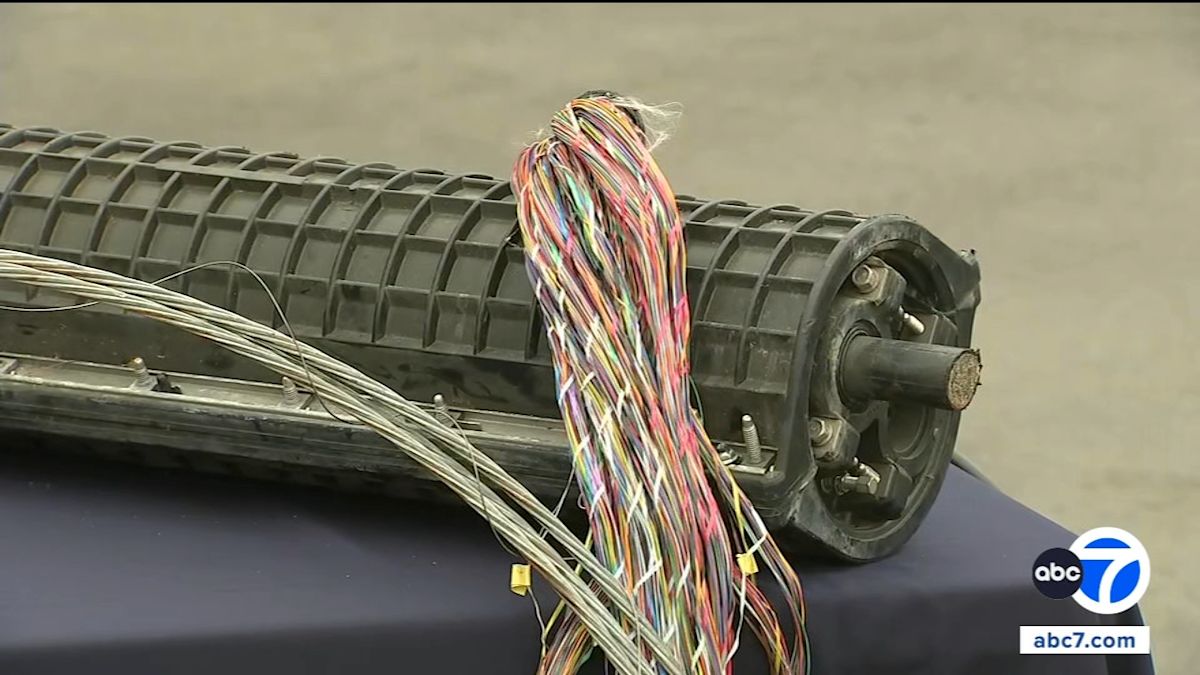
Across California, an escalating wave of metal theft has severely disrupted critical municipal infrastructure, knocking out essential phone connectivity and casting neighborhood streets into total darkness. In response to the growing crisis, a broad coalition of civic leaders, police officials, and local business representatives is mounting a coordinated campaign urging Governor Gavin Newsom to enact tougher legal mechanisms against illicit scrap operations.
At the heart of the legislative push is newly disclosed public data highlighting the staggering volume of infrastructure targeted by criminal operations. Over the course of the past year alone, thieves have stripped more than 27,000 feet of communications cable belonging to the Los Angeles Department of Water and Power, demonstrating the industrial scale at which illicit metal networks are currently operating within the city.
The total volume of communications wiring stripped from the municipal utility represents roughly five continuous miles of essential line. To put that figure into perspective, stretching that amount of cable vertically into the sky would match the typical cruising altitude of a commercial airliner, while laid end-to-end on the ground, it equals the distance of 90 standard football fields or approximately 165 Olympic-sized swimming pools.
The practical impact of these continuous thefts reaches far beyond missing materials, creating immediate safety risks and logistical nightmares for residents. When organized crews rip wiring from underground conduits and utility fixtures, entire neighborhoods in Los Angeles and other municipalities across the state are frequently left without functioning phone lines or dependable street lighting.
In an effort to equip authorities with stronger legal remedies, state lawmakers have advanced Assembly Bill 1941, an initiative tailored specifically to dismantle coordinated metal scavenging enterprises. The proposed statute introduces a newly defined criminal violation designated as "organized metal theft," creating specialized statutory tools to confront operations that have outgrown conventional petty theft statutes.
Under the provisions set forth in AB 1941, the legal framework would penalize both sides of the illicit trade. Any individuals who conspire to unlawfully extract infrastructure or knowingly purchase stolen metal components could face up to one year of incarceration, closing previous loopholes that allowed commercial scrap buyers and coordinated bands of thieves to evade meaningful accountability.
The urgency surrounding the measure was emphasized during a joint public appeal by local politicians, regional law enforcement authorities, and business community advocates. Together, members of the coalition maintained that enacting structured penalties is vital for safeguarding public resources and discouraging repeat offenses that jeopardize basic civic operations.
The rallying cry for the bill's ratification was staged directly at one of the region's most heavily targeted pieces of infrastructure: the 6th Street Bridge. Assembly Member Mark González, a Los Angeles representative who authored and sponsored the legislation, selected the landmark structure to highlight how severely local communities have suffered from relentless metal poaching.
The 6th Street Bridge has repeatedly been victimized by theft crews who sever and extract its internal electrical wiring under cover of night. These destructive raids have routinely plunged the entire landmark span into darkness, eliminating roadway visibility and creating hazardous transit conditions for drivers, cyclists, and pedestrians traversing the corridor.
The financial burden imposed on the public by these destructive acts has reached unprecedented levels. According to figures shared by González, taxpayers have already been forced to direct $11 million toward replacing ripped-out electrical lines and repairing the damaged systems on the 6th Street Bridge alone, underscoring the enormous economic fallout generated by metal thieves.
During the press briefing on the bridge, González delivered a stern warning to those profiting off municipal destruction. "California's infrastructure is not yours to steal," González asserted. "We have an opportunity to give prosecutors a stronger tool to hold organized metal thieves accountable and protecting the systems that keep our communities safe and connected."
The extent of the losses suffered by the Los Angeles Department of Water and Power was brought to light through public records requests pursued by 7 On Your Side Investigates. The resulting investigative disclosures have provided lawmakers with the empirical backing necessary to demonstrate that metal theft has evolved from sporadic petty crime into an organized threat against public utilities.
Municipal leaders emphasize that without decisive statutory reforms, cities throughout California will continue to bear millions of dollars in repair costs while essential public safety networks remain vulnerable. By codifying organized metal theft as a distinct criminal violation, supporters believe the state can dismantle the lucrative underground supply chains that incentivize widespread infrastructure vandalism.
With the legislative process concluded in the state capitol, Assembly Bill 1941 now sits on the desk of Governor Gavin Newsom. Community stakeholders and local officials remain watchful, awaiting executive action on a bill they believe is crucial for preserving the physical systems that keep California's cities illuminated, secure, and operational.


(0)